Water treatment · New Braunfels, TX
Water Softeners & Water Filtration in New Braunfels, TX
New Braunfels water is safe to drink and very hard, and NBU treats it with chloramine. Those are three different issues, and no single box fixes all of them. We test what’s coming out of your tap, then install, repair or service the equipment that actually matches it.
Licensed by the TSBPE · Upfront price before we start · Call us to check plumber availability
(11.8–15.6 gpg)Test yours.
USGS hardness scale · 1 gpg = 17.1 mg/L
What are you trying to fix?
Pick the problem. Each tile jumps to the part of this page that solves it.
What’s actually in New Braunfels tap water
NBU says groundwater gives the city’s water “higher levels of minerals like calcium and magnesium,” and that hardness “can vary depending on location, water source, and seasonal conditions.” NBU doesn’t publish a single number on that page. Third-party sites report roughly 202–267 mg/L (11.8–15.6 grains per gallon). Treat any number online as a starting point, not your home’s reading.
NBU disinfects with chloramines, a mix of chlorine and ammonia that lasts longer in the pipes than free chlorine (Community Impact, 2024). The 2025 Water Quality Report lists a yearly average of 2.58 ppm total chlorine, below the 4 ppm maximum.
NBU states hard water “is safe to drink and meets all state and federal drinking water standards.” In the 2025 report, lead and copper results were well under action levels, with no sites over.
Sources: NBU, “The Facts About Hard Water”; NBU 2025 Water Quality Report; Community Impact (Dec 19, 2024); tapwaterdata.com and aquatell.com (reported figures).
01
Does New Braunfels have hard water?
Yes. NBU says its groundwater carries higher levels of calcium and magnesium, which makes the water hard, and that hardness varies by location, source and season. Reported figures fall around 11.8 to 15.6 grains per gallon, which is “very hard” on the USGS scale. NBU also says hard water is safe to drink.
02
How hard is New Braunfels water in grains per gallon?
It depends on where and when you test. Third-party sites report roughly 11.8 to 15.6 grains per gallon (about 202 to 267 mg/L), and NBU notes hardness varies by source and season. Divide mg/L by 17.1 to get grains. A home test at your own faucet is the number to size a softener from.
03
Is New Braunfels tap water safe to drink?
Yes. NBU says its water meets all state and federal drinking water standards, including when it’s hard. In April 2026, routine testing found bacteria at some NBU wells. NBU said the water stayed safe, disinfected the wells, and stated it was not a boil water notice. Filters address taste, not safety.
How to test your water hardness at home
- Buy hardness test strips that read in grains per gallon or mg/L.
- Run the cold kitchen tap for about a minute.
- Fill a clean glass and dip the strip for the time on the package.
- Match the color to the chart and note the reading.
- If you have a softener, test both the bypass water and the softened water to see if it’s working.
04
How do I test my water hardness, and what should it read after a softener?
Use hardness test strips or a drop-count kit on cold water from the kitchen tap. In New Braunfels, untreated water should read very hard. After a working softener, softened water should read at or near zero grains. If it’s creeping back up, the softener needs salt, a setting change or service.
Softener, conditioner, filter or RO: match the tool to the problem
- Removes hardness?
- Yes
- Chloramine taste?
- No
- Uses salt?
- Yes
- Wastewater?
- Yes, during regeneration
- Septic notes
- Demand-initiated, labeled, air gap
Look for: NSF/ANSI 44
- Removes hardness?
- No, minerals stay
- Chloramine taste?
- No
- Uses salt?
- No
- Wastewater?
- No
- Septic notes
- None
Look for: third-party scale-reduction testing
- Removes hardness?
- No
- Chloramine taste?
- Yes, catalytic carbon
- Uses salt?
- No
- Wastewater?
- Backwash on some models
- Septic notes
- Backwash counts toward septic flow
Look for: NSF/ANSI 42 (53 for health claims)
- Removes hardness?
- Yes, at one faucet
- Chloramine taste?
- Yes, with carbon pre-filter
- Uses salt?
- No
- Wastewater?
- Yes, reject water
- Septic notes
- Under-sink is fine
Look for: NSF/ANSI 58
- Removes hardness?
- No
- Chloramine taste?
- No
- Uses salt?
- No
- Wastewater?
- No
- Septic notes
- None
Look for: NSF/ANSI 55
On New Braunfels’ very hard water, a salt softener is the only option here that removes hardness for the whole house. A conditioner can reduce scale, but water still feels and tests hard. Many homes pair a softener with a carbon filter, and an RO faucet for drinking.
05
Do I need a water softener in New Braunfels?
Not by law or by NBU. NBU calls softeners “optional and based on personal preference.” A softener earns its keep if you’re tired of scale and spots, run a tankless water heater, or want appliances to last. If spotting doesn’t bother you and you descale equipment on schedule, you can skip one.
06
Water softener or salt-free conditioner: which works on New Braunfels water?
For water this hard, a salt softener is the stronger choice if you want soft water. It removes calcium and magnesium. A salt-free conditioner leaves the minerals in, so water still tests hard and leaves some spots, but it can reduce scale inside pipes and heaters. It suits homes avoiding salt or brine discharge.
07
Can a whole-house filter replace a water softener?
No. A whole-house carbon filter targets chlorine, chloramine, taste and odor. It doesn’t remove calcium or magnesium, so it won’t stop scale or spots. If you want both better-tasting water and soft water, the usual setup is a carbon filter ahead of the softener, which also protects the softener’s resin.
08
What certifications should a softener or filter have?
Look for NSF/ANSI certification for the job you’re buying it for: 44 for softeners, 42 for chlorine, chloramine, taste and odor, 53 for health-related contaminants, 58 for reverse osmosis and 55 for UV. “Tested to” isn’t the same as “certified to,” so check the certifier’s listing for the exact model.
Chloramine: why some filters miss it
NBU disinfects with chloramines. Chloramine is chlorine bonded with ammonia, so it lasts longer in the pipes between the plant and your faucet. That’s good for public health, and it’s also why some people taste or smell it at the tap.
It’s also tougher to remove than plain chlorine. Standard activated carbon handles free chlorine quickly but needs far more contact time for chloramine. Catalytic carbon is made for it. In a reverse osmosis system, a carbon pre-filter rated for chloramine protects the membrane, too.
“I would still say go ahead and test your water.” Eric Yeggy, Water Quality Association, to Community Impact (2024)
Two groups need to take chloramine seriously. It’s toxic to aquarium fish, so tank water needs a dechlorinator labeled for chloramine. People on home dialysis need water treatment specified by their care team. When NBU switched Copper Ridge to chloramine in 2018, it flagged both.
09
Does a water softener remove chlorine or chloramine?
No. A softener’s resin exchanges hardness minerals. It isn’t designed to remove chlorine or chloramine, and chlorine can wear down resin over time. To improve taste and odor from NBU’s chloramine, add a catalytic carbon filter, usually installed before the softener, or use an RO system with a chloramine-rated pre-filter at the kitchen sink.
10
What filter removes chloramine?
Catalytic carbon is the go-to for whole-house chloramine reduction, because ordinary carbon needs much longer contact time to work on it. For drinking water, reverse osmosis with a carbon pre-filter rated for chloramine works well. Check for NSF/ANSI 42 certification that specifically lists chloramine reduction, not just chlorine.
11
Is reverse osmosis worth it in New Braunfels?
It’s worth it if you buy bottled water or dislike the taste at the tap. An under-sink RO system makes softer, low-mineral drinking water at one faucet, with a carbon stage for chloramine. It sends some water down the drain as it works, needs filter changes, and should be certified to NSF/ANSI 58.
What size water softener does your home need?
Softeners are rated in grains: how much hardness they can remove before they regenerate. Size one too small and it regenerates constantly, wasting salt and water. Too large on a timer and the resin sits idle.
Example for illustration only: a family of four on water testing 15 gpg.
Add capacity for iron if you’re on well water. Your own hardness test and real water use decide the final size.
12
What size water softener do I need?
Multiply your hardness in grains per gallon by the number of people and about 75 gallons per person per day. That’s your daily grain load. Multiply by the days you want between regenerations, about seven, and choose a softener with that much usable capacity. Well water with iron needs extra capacity on top.
13
Does softened water have a lot of sodium, and can I use potassium?
A salt softener adds some sodium as it removes hardness, and the amount rises with how hard your water is. Most households don’t need to worry, but anyone on a sodium-restricted diet should ask their doctor. Potassium chloride works in most softeners instead of salt, and an RO faucet removes most sodium from drinking water.
Where a softener goes, and what the install includes
- On the main line, after the hose bibs, so outdoor water stays unsoftened.
- Before the water heater, so the heater gets softened water.
- A bypass valve to send water around the softener for service or watering.
- A drain with an air gap to keep regeneration water from siphoning back. On septic, it’s required by state rule.
- An outlet nearby for the control valve.
- A carbon filter ahead of it (optional) for chloramine.
Many homes have a pre-plumbed softener loop in the garage: two pipe stubs and sometimes a drain. If yours doesn’t, we can add a loop and drain. The City’s plumbing permit form lists water softener work, and installs are inspected under the codes the City has adopted.
14
What is a water softener loop, and does my house have one?
A loop is a pair of pipe stubs, usually in the garage near the water heater or where the main line enters, that lets a softener connect without re-plumbing the house. Look for two capped pipes or a looped pipe on the wall, sometimes with a drain. If there’s none, a plumber can add the loop and drain.
15
Where should a water softener be installed?
On the main water line where it enters the house, after the line splits to outdoor hose bibs and before the water heater. It needs a drain with an air gap for regeneration water, a nearby outlet for the control valve, and room to add salt. A bypass valve lets you take it offline for service.
16
Can I buy a softener myself and have a plumber install it?
Often, yes. Plenty of New Braunfels homeowners buy a unit from a store and hire a plumber to install it. Check the unit’s warranty terms first, because some require professional installation. Bring the model number when you call so we can confirm the loop, drain and valve fit, then give you an upfront price.
Who’s allowed to install water treatment in Texas
Can install, exchange, service and repair water treatment equipment, but not RO or deionization unless supervised.
Adds reverse osmosis and deionization equipment.
TCEQ exempts individuals licensed under Texas Occupations Code Chapter 1301, which is the plumbing license.
17
Do I need a permit or a licensed installer for a water softener in New Braunfels?
The City’s plumbing permit application lists water softeners as their own item, and only license holders can apply as plumbing contractors. Under TCEQ rules, paid water treatment work needs a Water Treatment Specialist license, but licensed plumbers are exempt. Ask any installer which license they hold before work starts.
Septic systems and private wells around New Braunfels
- 1
NBU city water
Hardness varies by source and season, and there’s chloramine for disinfection. A softener drains to the sanitary sewer through an air gap.
- 2
Homes on septic
Texas rules (30 TAC §285.37) allow softener discharge into a septic system only when:
- the softener uses demand-initiated regeneration (it regenerates by actual water use, not a timer);
- it has a label on the outside naming the company that installed it;
- the discharge enters the system through an air gap;
- with an aerobic or other proprietary treatment unit, the softener drain bypasses the treatment unit to the pump tank.
An under-sink RO is fine on septic. Whole-house RO backwash has to be counted in the septic system’s design flow. Softeners installed before September 1, 2003, can stay until the softener is replaced or the septic system is altered.
- 3
Private wells
Wells in the Trinity Aquifer west of town often run much harder than city water. A state groundwater report put most Trinity samples at 250–500 mg/L hardness, with iron in some areas and rising sulfate in others. Test for hardness, iron, sulfur and bacteria before choosing equipment. TCEQ’s water treatment rules apply to public water systems, not private household wells.
18
Can I put a water softener on a septic system?
Yes, if it meets Texas rules. The softener must use demand-initiated regeneration, carry an outside label naming the installer, and discharge through an air gap. With an aerobic or other proprietary system, its drain must bypass the treatment unit to the pump tank. Older timer softeners must be upgraded when replaced or when the septic is altered.
19
What about well water near Canyon Lake?
Expect it to be harder than city water and to vary well to well. Trinity Aquifer samples in a state groundwater report mostly ran 250 to 500 mg/L hardness, with iron in some areas. Test for hardness, iron, sulfur smell and bacteria first. Then size a softener for hardness plus iron, and add iron or UV treatment if needed.
Water softener repair: check these first
20
Why is my water softener not working?
The usual causes are simple: the bypass valve left open, no salt, a salt bridge stopping brine from forming, or settings lost after a power outage. If those check out and water still tests hard, the control valve, injector or resin may need service. Resin beads in faucet screens point to a failed internal part.
21
How long does a water softener last, and should I repair or replace it?
Many last 10 to 15 years or more with salt and service, and resin can be replaced. Repair when the problem is a valve, seal, injector or settings and the tanks are sound. Consider replacing when the control valve is obsolete, tanks crack, the unit is badly undersized, or repairs keep repeating.
22
How much salt does a softener use, and how often do I add it?
It depends on your hardness, water use and the softener’s efficiency. A demand-initiated softener uses salt only when it regenerates by actual use, so it typically uses less than a timer model. Check the brine tank monthly, keep salt a few inches above the water line, and use clean softener pellets or crystals.
23
Why does my NBU continuous-use alert go off at night?
Often it’s the softener. Many regenerate overnight, sending water to the drain for a short time, which NBU’s alert can read as continuous use. NBU lists softener regeneration among things that look like leaks. If the alert matches your softener’s schedule and stops, that’s likely it. If it keeps going, check for a leak.
24
Do I need a water softener for a tankless water heater?
It’s not required, but it helps on water this hard. Scale builds up fast in a tankless heat exchanger, and some manufacturers’ warranties exclude scale damage. A softener cuts the buildup, and a scale inhibitor is a lighter alternative. Either way, keep up the annual descaling. Our tankless page covers the maintenance.
Leak or softener? See leak detection. Tankless care: tankless water heaters.
How a water treatment job runs
- 1Call
Tell us what’s bothering you: spots, taste, a failing unit, septic or well.
- 2Test
Hardness at your tap, and chlorine/chloramine. Wells get a broader test plan.
- 3Recommend
The smallest setup that solves the actual problem, with the NSF/ANSI certification to look for.
- 4Upfront price
Before any work starts, including any loop, drain or air gap work.
- 5Install or repair
Set hardness, regeneration and bypass. On septic: a DIR setting and the installer label.
- 6Retest and show you
A softened-water test at the tap, and how to add salt and use the bypass.
What affects the cost of a water softener or filter
Bigger chip, bigger effect. We test first, then give you an upfront price for each option that fits before any work starts. Call us for pricing.
25
How much does a water softener cost in New Braunfels?
It depends on the type and capacity of the system, whether your home already has a softener loop and drain, whether you add a carbon filter for chloramine, and septic or well requirements. Installing a unit you already bought is a different job from a full new setup. Call us for an upfront price before any work starts.
26
Are free in-home water tests worth it?
A test is useful; a sales pitch disguised as one isn’t. A real test reports hardness in grains or mg/L and chlorine or chloramine, and for wells, iron and bacteria. Ask for the numbers in writing. Compare them with NBU’s water quality report, and don’t let a single demo decide a large purchase.
Who needs water treatment here, and when it matters most
Problem types
- White scale and spots (hardness)
- Chlorine or chloramine taste
- Scale shortening water heaters
- Scale and chloramine wearing out toilet parts
- Well water with iron, sulfur or sediment
Who this is for
- Homeowners on NBU water tired of scale on glass and fixtures
- Owners of tankless heaters protecting the warranty
- Well owners around Canyon Lake, Bulverde and Spring Branch
- Families with an aquarium or who want better-tasting drinking water
When it happens most
- Summer: heavy use means more regeneration and more salt
- Drought: well water quality can change as aquifer levels drop
- After a boil notice: bypass the softener, then flush and sanitize it
- Every year: service filters and RO stages on a schedule
Leak, pipe and sewer repair examples in Comal County
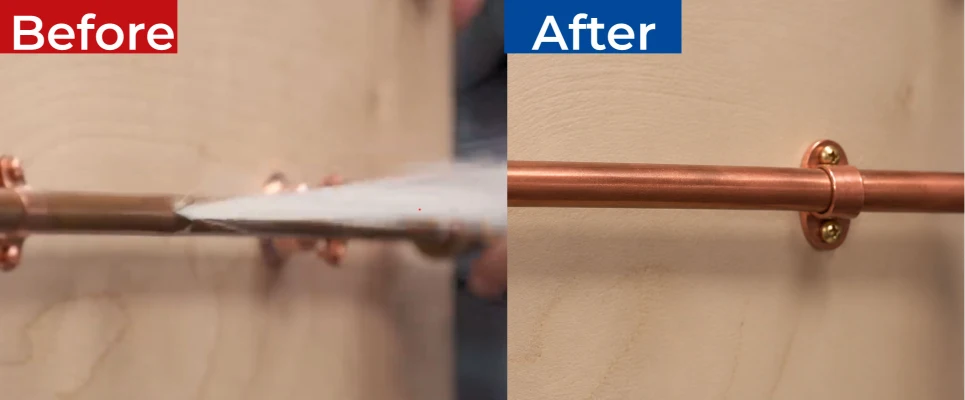
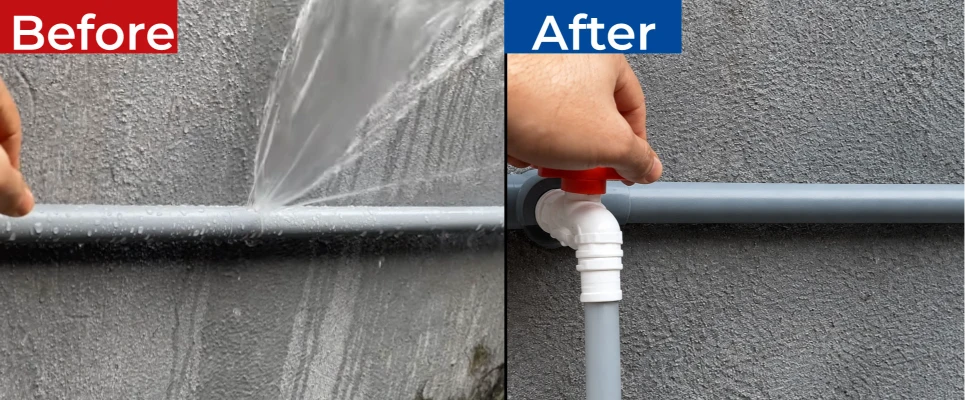
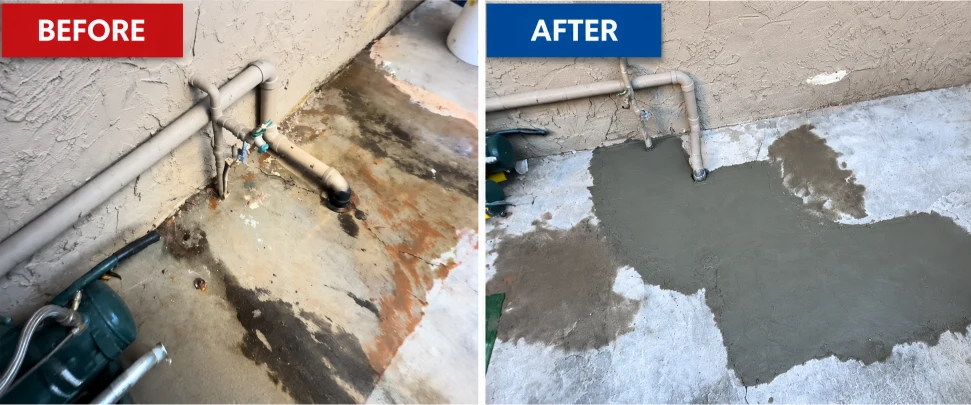
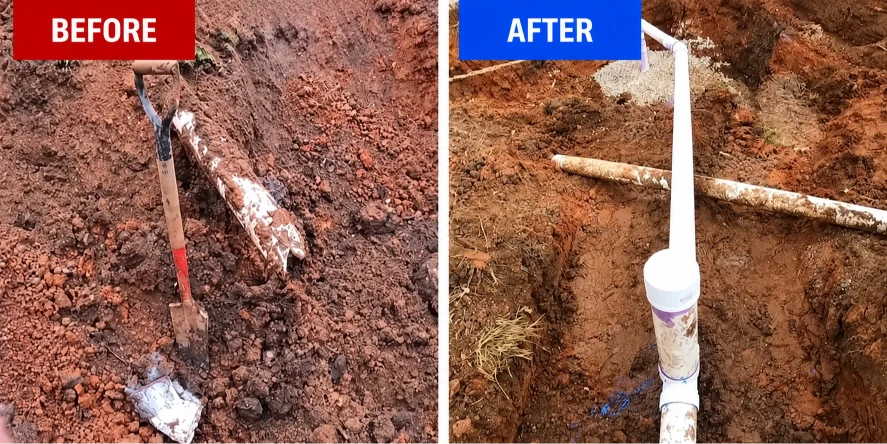
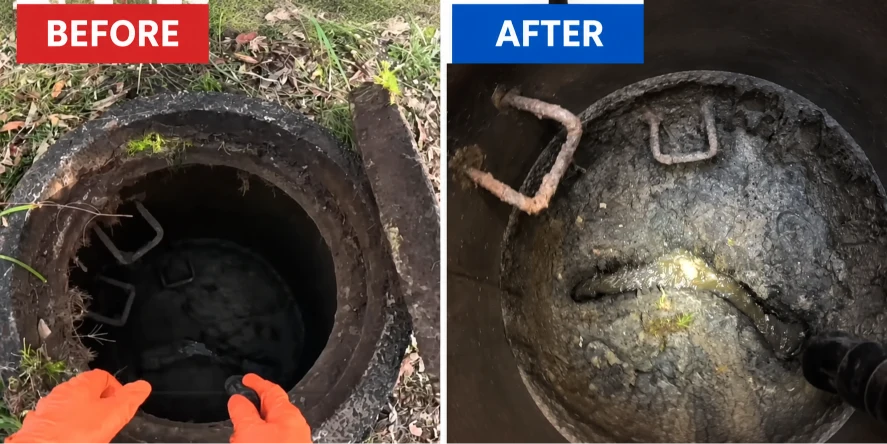
Photos are illustrative examples of typical repairs.
Water treatment by water source across New Braunfels
NBU city water
Most of New Braunfels, from downtown to the newer subdivisions. Very hard, with chloramine.
Purchased and neighboring supplies
NBU also buys water from Green Valley SUD and GBRA as needed, and some areas are served by other utilities. Ask your provider for its water quality report.
Private wells
Rural Comal County and the Canyon Lake side. Often harder, sometimes with iron or sulfur; test first.
Call us to check plumber availability in your area.
Your reading
Send us your hardness reading
Have these ready when you call:
- Your test-strip reading, or “not tested yet”
- City water, septic, or a private well
- The softener or filter you have now (brand and age), if any
Licensed by the TSBPE · Upfront price before we start · Call us to check plumber availability
About us
New Braunfels Plumbing Tx is a local plumbing service for homes across New Braunfels and Comal County, focused on emergencies, slab leaks, water heaters, drains and NBU water issues.
Contact
New Braunfels Plumbing Tx4665 FM 482, New Braunfels, TX 78132
(830) 218-7472
support@newbraunfelsplumbingtx.com
Mon–Fri 7 AM–7 PM · Sat–Sun 8 AM–5 PM
Call to check plumber availability
Licensed by the TSBPE
Sources
New Braunfels Utilities (“The Facts About Hard Water”; FAQs, Apr 2026; 2025 Water Quality Report; Water Notice, Apr 2026; Continuous Water Use Alerts); Community Impact (Dec 19, 2024; May 15, 2018); TCEQ (Water Treatment Specialist license); 30 Texas Administrative Code §285.37; City of New Braunfels (Plumbing Permit Application); Texas Water Development Board (Report 273); USGS hardness classification; NSF/ANSI 42, 44, 53, 55, 58; tapwaterdata.com and aquatell.com (reported hardness).