Repiping · New Braunfels, TX
Whole-House Repiping in New Braunfels, TX
When leaks keep showing up in different rooms, the water runs rusty, or the inspector flags gray plastic pipe, patching one spot at a time stops making sense. We replace the water lines in part or all of your home with PEX or copper. The job is permitted, pressure tested and inspected.
Licensed by the TSBPE · Upfront price before we start · Call us to check plumber availability
- Project
- Water supply repipe
- City
- New Braunfels, TX
- Code
- 2021 IRC · 2020 NEC
- Sheet
- 1 of 1
Patch it, repipe part of it, or repipe the whole house?
Repair the spot
- One leak, at a fitting or a single damaged section
- The rest of the pipe ages well (PEX, sound copper)
- No discolored water, normal pressure everywhere
- A newer home with a clear cause: a nail, a freeze, one bad fitting
Partial repipe
- Repeated leaks on one branch, one bathroom group or one slab line
- A slab line that keeps failing, rerouted overhead instead of opened again
- An addition or remodel tied to older pipe
- Galvanized pipe left on just part of the house
Whole-house repipe
- Leaks in different rooms over a year or two
- Polybutylene throughout
- Galvanized pipe with rusty water and low pressure at many fixtures
- Copper with pinholes showing up in more than one place
How do I know if my house needs to be repiped?
Look for a pattern, not a single event. Leaks in different rooms, brown or rusty water when a tap first opens, weak pressure at several fixtures, and green or white crust on fittings all point to aging pipe throughout the house. Polybutylene or galvanized supply pipe is a reason to plan a repipe even before it fails.
Should I repair the leak or repipe the whole house?
Repair when the leak has a clear, one-time cause and the rest of the pipe is sound. Repipe when leaks keep appearing in new places, the material is known to fail, or the water quality and pressure are poor across the house. Each repair opens walls or floors, so repeat repairs can add up to more disruption than one repipe.
One leak under the slab? See slab leak repair. Not sure where the water is going? See leak detection.
What pipe is likely in a New Braunfels home of your age
New Braunfels is a young city by housing stock. The U.S. Census Bureau’s American Community Survey (2019–2023) puts the median home here at built in 2006. But about one home in five was built before 1980, and older neighborhoods are where most repipes happen.
Share of New Braunfels homes by year built. Source: U.S. Census Bureau, ACS 2019–2023 5-year estimates. Era materials are typical patterns, not a rule. Polybutylene was installed roughly from the late 1970s to the mid-1990s. Remodels, repairs and builders vary, so check your own pipe.
In newer homes, the question is usually different: a failed crimp ring or push fitting, a PEX line that froze in the attic, or a slab line. Those are repairs or partial reroutes, not whole-house jobs.
Do New Braunfels homes have galvanized or polybutylene pipe?
Some do. Census data shows about 20 percent of New Braunfels homes were built before 1980, when galvanized steel was common, and another 17 percent between 1980 and 1999, the era when polybutylene was widely installed. Most homes built since 2010 have PEX. Remodels mix materials, so check what’s actually in your walls.
How to identify the pipe material in your home
- Find exposed pipe: at the water heater, under the kitchen sink, at the main shut-off, or in the attic.
- Check the color. Copper is orange-brown and may have green spots. PEX is flexible red, blue, white or gray tubing. CPVC is rigid and cream or tan. Polybutylene is gray, sometimes blue outside.
- Read the printing. PEX says “PEX” with a standard number. Polybutylene often reads “PB2110.” CPVC says “CPVC.”
- Hold a magnet to dull gray metal pipe. If it sticks and the fittings are threaded, it’s galvanized steel.
- Take a photo of the pipe and its printing to send us when you call.
How do I identify polybutylene or galvanized pipe?
Polybutylene is a flexible gray plastic, often stamped “PB2110,” with plastic or metal crimp fittings. Galvanized is dull gray steel with threaded joints, and a magnet sticks to it. Check at the water heater, under sinks, and where the main line enters. A photo of the pipe and any printing helps us confirm it by phone.
PEX-A, PEX-B, copper or CPVC: the pipe that goes in
- Joins with
- Expansion fittings (ASTM F1960): the pipe is stretched, then shrinks onto the fitting
- Flexibility
- The most flexible; a kink can often be repaired with heat
- Freeze
- Tolerates expansion better than rigid pipe, but fittings and pipe can still fail
- Sun (UV)
- Must be shielded; not for exposed outdoor runs
- Good for
- Whole-house repipes with fewer fittings and long attic runs
- Joins with
- Crimp or clamp rings (ASTM F1807 / F2159)
- Flexibility
- Stiffer than PEX-A
- Freeze
- Similar to PEX-A, more tolerant than rigid pipe
- Sun (UV)
- Must be shielded
- Good for
- Repairs and repipes where crimp fittings are preferred; widely available
- Joins with
- Soldered or press fittings
- Flexibility
- Rigid
- Freeze
- Can split when water freezes inside
- Sun (UV)
- Unaffected; good for exposed runs
- Good for
- Exposed or outdoor pipe, near equipment, metal preference. Type L has a thicker wall than Type M
- Joins with
- Solvent cement
- Flexibility
- Rigid; can turn brittle with age
- Freeze
- Can crack
- Sun (UV)
- Must be shielded
- Good for
- Spot repairs matching existing CPVC; rarely chosen for a full repipe
Rusts from the inside. Scale narrows the pipe, causing low pressure and rusty water.
Gray plastic supply pipe from roughly the late 1970s to mid-1990s. It’s known for failures at fittings and in the pipe itself and was the subject of a national class-action settlement. Home inspectors and some insurers flag it.
Is it better to repipe with PEX or copper?
For most New Braunfels repipes, PEX: it bends around framing with fewer fittings, handles freezes better than rigid pipe, and isn’t affected by hard water scale the way metal is. Copper still wins for runs exposed to sunlight and near some equipment. Both pass code. The right choice can be PEX inside with short copper transitions.
What’s the difference between PEX-A and PEX-B?
The main difference is how they’re made and joined. PEX-A is more flexible and uses expansion fittings, where the pipe shrinks back over the fitting. A kink can often be fixed with heat. PEX-B is stiffer and uses crimp or clamp rings. Both are rated for home water systems. PEX-A means fewer fittings on long, curving runs.
What are the downsides of PEX?
Sunlight breaks it down, so it can’t be left exposed outdoors. It can’t connect directly to some gas water heaters; manufacturer instructions set a distance. It can’t serve as an electrical ground the way metal pipe can. Rodents occasionally chew it. And the fittings, not the pipe, are where most PEX failures start.
Why do copper pipes get pinhole leaks in New Braunfels?
There’s rarely one cause. Pitting corrosion is the usual mechanism, and factors commonly cited include water chemistry, disinfectant, hardness, high water velocity and installation quality. New Braunfels water is very hard, and NBU disinfects with chloramine. When pinholes show up in several places, the pipe walls are thinning throughout, and patching won’t keep up.
Attic, slab and walls: how the new pipe gets to your faucets
Most New Braunfels homes sit on slab foundations, so we don’t run new supply pipe under the slab. We take it overhead: from the main shut-off up into the attic, along the framing, and down inside the walls to each fixture. The old lines under the slab are capped and left in place.
Can you repipe a house on a slab foundation?
Yes. Instead of breaking the slab, the new lines go overhead. They run from the main shut-off up into the attic, across, and down interior walls to each fixture. The old lines under the slab are disconnected and capped. This is also how a single failing slab line is often rerouted, without tunneling or opening floors.
Is PEX in the attic a problem in Texas heat and freezes?
It works when it’s installed for both. PEX is rated for hot water, and attic runs should be supported and kept out of direct sun from vents. Freezes are the bigger risk. Lines should sit on the warm side of the attic insulation, away from eaves and open vents, and insulated where they can’t be buried.
How many holes will you cut in the walls, and who patches them?
Usually small access openings near each fixture and where lines turn down from the attic, not whole walls. The count depends on the floor plan, the number of bathrooms and attic access. We mark the openings with you before we start, and your written scope states how they’re patched and finished.
Does repiping include the drain pipes?
No. Repiping replaces the water supply lines, the pressurized pipes that bring water to faucets, showers and appliances. Drain, waste and vent pipes are a separate system that carries water away. If drains are also failing, for example old cast iron, that’s a separate scope. See our sewer line page for those.
Drains backing up? See drain cleaning and sewer line repair.
How a repipe runs, day by day
- Identify the pipe material and every fixture
- Check attic access, the main shut-off and the water heater
- Check whether the metal pipe is part of the electrical ground
- Written scope: material, route, openings, patching, water-off windows
- Upfront price before we start
- Permit pulled
- Protect floors and furniture
- Open access points
- Run new trunk lines through the attic
- Drop lines to each fixture
- New shut-off valves (angle stops) at sinks and toilets
- Connect the water heater, hose bibs, ice maker and washer
- Pressure test (2021 IRC P2503.7)
- City inspection
- Flush the lines; check every fixture for flow and leaks
- Patch openings per the written scope
- Show you the new main shut-off and how to use it
- Cap and abandon the old lines
We plan water-off windows with you in writing before work starts. How many days the work takes depends on the size of the home, the number of bathrooms and attic access.
How long does a whole-house repipe take, and will I have water?
Most whole-house repipes take several working days, depending on home size, bathrooms and attic access. Water is shut off during parts of each day while lines are connected. We plan the water-off windows with you in writing before we start, so you know when to fill pots or skip the laundry.
Do I have to move out during a repipe?
Usually not. Most families stay home, using the house in the evenings and planning around daytime water-off windows. Furniture near walls with access openings needs to move a few feet, and there will be some dust. People working from home or with infants sometimes plan a day away during the noisiest work.
What a repipe opening actually looks like
New supply lines are fished down inside the walls from the attic. Openings are made where a line has to cross framing or connect to a fixture, typically behind sinks and toilets, at shower valves, and where lines turn down from the ceiling. It’s patchwork, not demolition.
Permit, pressure test and inspection
- Permit
- City of New Braunfels, plumbing
- Code
- 2021 IRC / IPC
- Test
- Working pressure, 15 minutes minimum
- Water
- From a potable source
- Inspection
- Before walls are closed
The City of New Braunfels plumbing permit application lists water line work, and only license holders can apply as plumbing contractors. The City has adopted the 2021 International Residential and Plumbing Codes and the 2020 National Electrical Code.
The 2021 IRC (section P2503.7) requires a new water-supply system to be “tested and proved tight” under water pressure at least equal to the system’s working pressure. Non-plastic pipe may instead get an air test of at least 50 psi. The test pressure is held for at least 15 minutes. For PEX, an air or gas test is allowed only when the pipe and fitting manufacturer’s instructions specifically authorize it.
Does repiping require a permit in New Braunfels?
Yes. Water line work appears on the City of New Braunfels plumbing permit application, and only license holders can apply as plumbing contractors. The work is inspected under the 2021 International Residential and Plumbing Codes the City has adopted. Ask any contractor whether the permit is included in the price before you sign.
How is a new water system tested?
Under the 2021 IRC, the new piping must be tested and proved tight with water at no less than the system’s working pressure, held for at least 15 minutes. Metal pipe can be air tested at 50 psi or more instead. PEX can be air tested only when its manufacturer allows it.
Your water pipe may be part of your electrical ground
In many older homes, the metal water pipe is part of the electrical grounding system: a clamp and wire connect the electrical panel to the pipe. Replace that metal pipe with PEX and the path can be lost. The electrical code (the City has adopted the 2020 NEC) requires grounding to stay in place.
During the walkthrough, we look for a grounding clamp on the water pipe. If the repipe will affect it, we flag it in your written scope and coordinate with a licensed electrician to keep the home properly grounded and bonded.
Will repiping affect my home’s electrical grounding?
It can. If the home’s electrical system uses metal water pipe as a grounding electrode, replacing it with plastic pipe can interrupt that path. The 2020 National Electrical Code, adopted by New Braunfels, requires grounding to be maintained. A licensed electrician handles any grounding or bonding changes, and the plumber should flag it before work starts.
The line from the meter, and NBU’s service line letters
Example only. This is not a real NBU letter.
The pipe between the NBU meter and your house is the service line. The utility’s side runs to the meter; the side from the meter to your home is generally the property owner’s. If you’re repiping because of old galvanized pipe, the service line may be the same age and material.
Since April 2023, NBU has been building an inventory of service line materials, as required by the EPA’s Lead and Copper Rule revisions. It submitted the inventory to the EPA on October 26, 2024, and offers an interactive map. Letters went to customers in categories including “Lead Service Line – Unknown” and “Galvanized Requiring Replacement (GRR).” NBU calls lead lines “highly unlikely” and says no action is required unless you receive direct communication.
I got an NBU “Galvanized Requiring Replacement” letter. What does it mean?
It means NBU’s service line inventory flagged galvanized pipe that may have been downstream of lead, or whose history can’t be ruled out. Read the letter for what NBU will do on its side and what it asks of you. If your side of the line is galvanized, we can replace it. Call NBU with questions about the letter itself.
Should the water line from the meter be replaced too?
If it’s the same old material as the pipe inside, or it has already leaked, it’s worth replacing during the repipe. It’s often the most convenient time. A failing service line can cause low pressure throughout the house and continuous-use alerts. If it’s sound PEX or copper, it can usually stay.
Will repiping fix low water pressure?
It will when the cause is the pipe itself, such as galvanized lines narrowed by scale inside. It won’t when the cause is a failing pressure-reducing valve, a partly closed main valve, a clogged filter or softener, or a problem on the utility side. We check pressure at the hose bib before recommending a repipe for pressure alone.
What affects the cost of a repipe
- Number of bathrooms and fixtures
- Square footage and one or two stories
- Attic access and height
- Pipe material (PEX-A, PEX-B or copper)
- Partial or whole-house
- Wall finishes and patching
- Meter-to-house service line
- Grounding work by an electrician
Online ranges vary because the jobs vary. A two-bath, single-story home with an easy attic is a different job from a two-story house with tile walls. We walk the house, then give you an upfront price before any work starts. Call us for pricing.
How much does it cost to repipe a house in New Braunfels?
It depends on the number of bathrooms and fixtures, the size and layout of the house, attic access, the material, whether the meter line is included and how the openings are finished. Ranges online don’t account for your home. We walk through the house and give you an upfront price before any work starts. Call us for pricing.
Does homeowners insurance pay to repipe a house?
Usually not. Standard homeowners policies typically treat worn-out pipe as wear and tear, so the repipe itself isn’t covered. Sudden water damage from a leak may be covered, depending on your policy and how the damage happened. Ask your insurer before work starts, and keep photos of the failed pipe and any damage.
Does repiping add value, and is it tax deductible?
A repipe can help when selling, because buyers’ inspectors flag polybutylene and galvanized pipe, and replacement removes that objection. For taxes, a home improvement on a personal residence generally isn’t deductible, but it may count as a capital improvement that adds to your cost basis. Keep the invoice and permit, and ask a tax professional.
Whose homes need repiping, and when to schedule it
Problem types
- Repeat slab leaks
- Polybutylene (gray) pipe
- Galvanized pipe with rust and low pressure
- Pinhole leaks in copper
- Finding leaks before deciding
Who this is for
- Owners of homes built before 1995
- Buyers whose inspection found polybutylene or galvanized pipe
- Landlords tired of repeat leak calls
- Homeowners planning a remodel who want new lines first
When it happens most
- After a freeze: old pipes that burst once often fail again
- Before a sale: sellers repipe to clear an inspection item
- Spring and fall: mild weather makes attic work easier
- Late summer: repeated slab leaks during drought push the decision
Repipes before and after
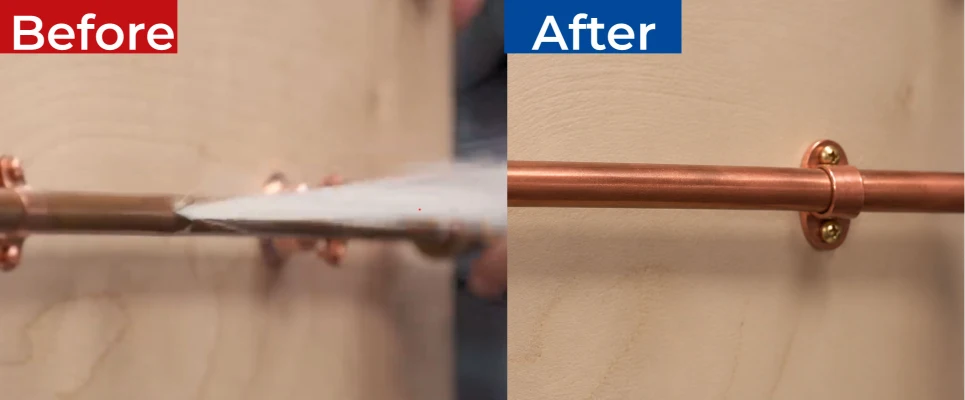
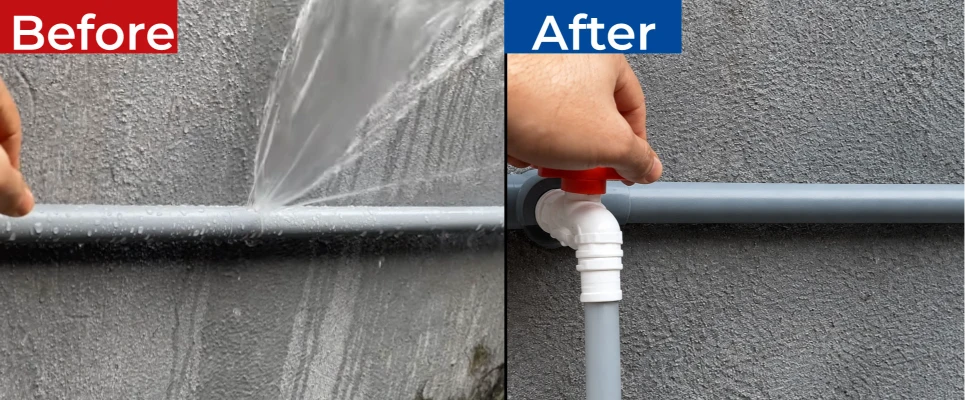
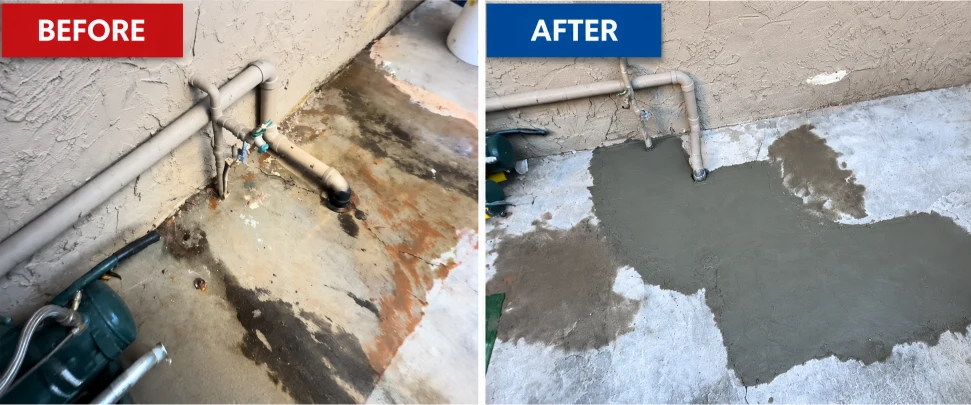
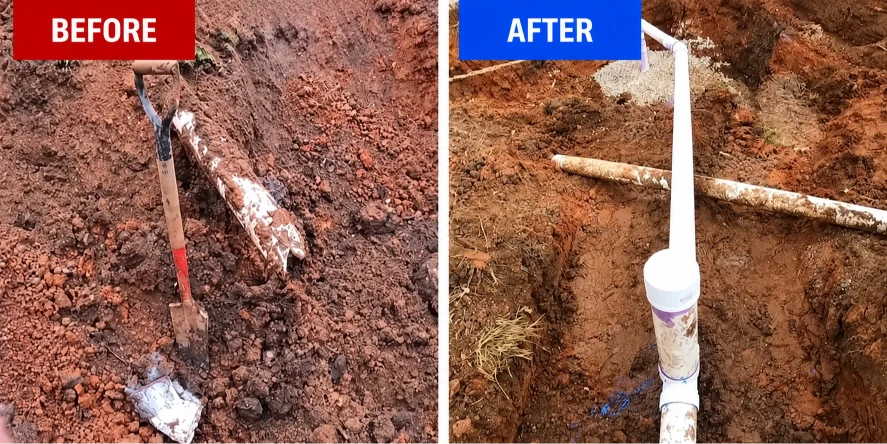
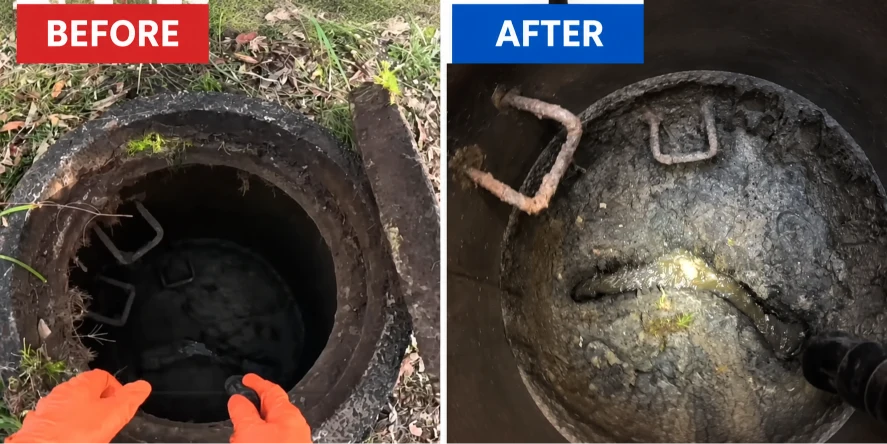
Photos are illustrative examples of typical repairs.
Repiping across New Braunfels, old and new
Older neighborhoods
The original town and the areas built out through the 1990s hold most of the city’s galvanized, older copper and polybutylene pipe. Whole-house repipes are most common here.
Newer subdivisions
Most homes already have PEX or CPVC. Repipe calls here are usually about failed fittings, attic lines that froze, or a slab line rerouted overhead.
Call us to check plumber availability in your area.
Related: Slab leak repair · Leak detection · Water heater repair & replacement · Sewer line repair · Water softeners & filtration · Emergency plumber · Home
Tell us three things about your pipe
Have these ready when you call:
- About when the home was built
- The pipe you can see at the water heater or under a sink (a photo helps)
- Your leak history: where, and how many times
Licensed by the TSBPE · Upfront price before we start · Call us to check plumber availability
About us
New Braunfels Plumbing Tx is a local plumbing service for homes across New Braunfels and Comal County, focused on emergencies, slab leaks, water heaters, drains and NBU water issues.
Contact
New Braunfels Plumbing Tx4665 FM 482, New Braunfels, TX 78132
(830) 218-7472
support@newbraunfelsplumbingtx.com
Mon–Fri 7 AM–7 PM · Sat–Sun 8 AM–5 PM
Call to check plumber availability
Licensed by the TSBPE
Sources
U.S. Census Bureau (American Community Survey 2019–2023, year structure built); New Braunfels Utilities (Water Line Inventory; 2025 Water Quality Report); Community Impact (Dec 19, 2024; Feb 18, 2021); City of New Braunfels (Plumbing Permit Application: 2021 IRC/IPC, 2020 NEC); International Residential Code 2021, P2503.7; National Electrical Code 2020, Article 250; ASTM F1960, F1807, F2159.